Intellivision
- Manufacturer
- Mattel
- Production
- 1979–1990
- Generation
- Gen 2
- Type
- Home
- Region
- US
- Launch price
- $275
- Media
- Cartridge
- Units sold
- 3.0M
About Intellivision
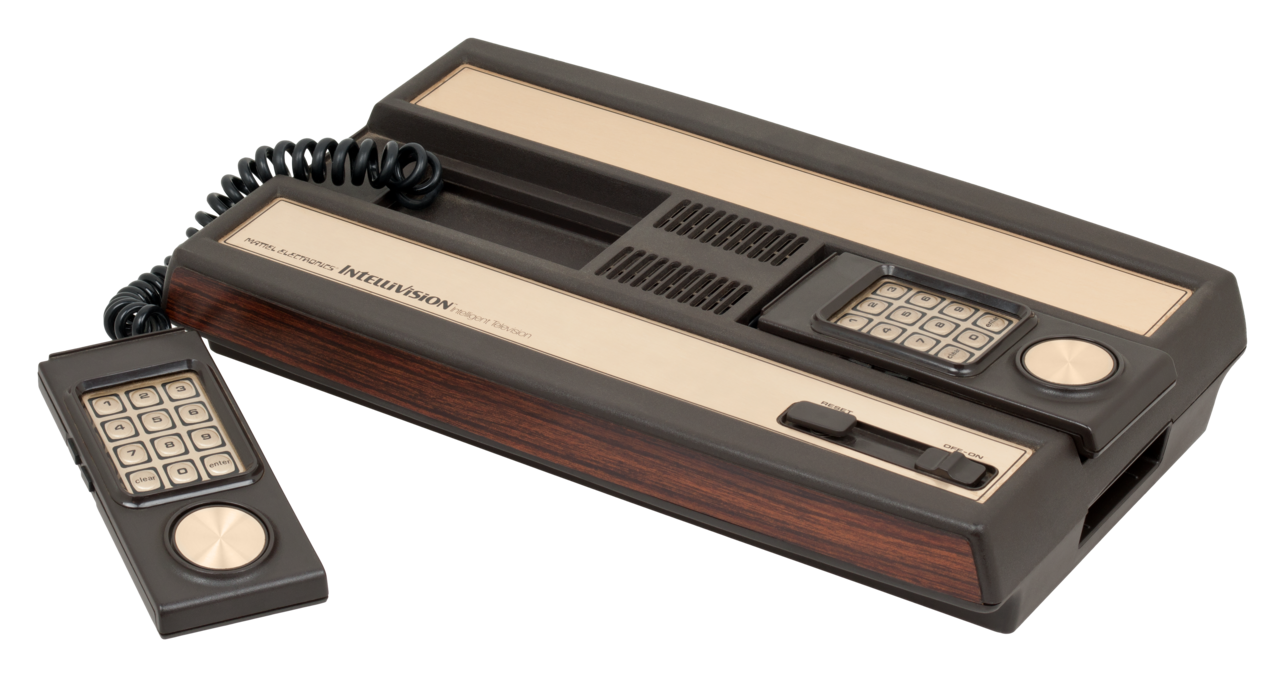
The Intellivision is a home video game console released by Mattel Electronics in 1979. It distinguished itself from competitors with more realistic sports and strategic games. By 1981, Mattel Electronics had close to 20% of the domestic video game market, selling more than 3.75 million consoles and 20 million cartridges through 1983. At its peak, Mattel Electronics had about 1,800 employees in several countries, including 110 videogame developers. In 1984, Mattel sold its video game assets to a former Mattel Electronics executive and investors, eventually becoming INTV Corporation. Game development ran from 1978 to 1990, when the Intellivision was discontinued.
Source: Wikipedia (text under CC BY-SA 4.0).
Library & collector facts
125licensed games
- North America: 125
Release timeline
- 🇯🇵 Japan
- March 22, 2017
- 🇺🇸 North America
- November 1, 1981
- Lifespan
- 11 years on market
Pricing
Launch price (1979)
- 🇺🇸 USD
- $275
- 🇯🇵 JPY
- ¥49,800
- 🇬🇧 GBP
- £199
Launch titles & exclusives
Las Vegas Poker & Blackjack · Backgammon · Armor Battle · Math Fun · Auto Racing
Las Vegas Poker & Blackjack
Astrosmash · Major League Baseball · Utopia (early god/sim game) · Tron: Deadly Discs · B-17 Bomber (first console game with synthesized speech, via Intellivoice) · Advanced Dungeons & Dragons · Sea Battle
Spiker! Super Pro Volleyball (1990) was among the last INTV Corporation releases; Mattel exited 1984, INTV continued production through 1990
Magic Carousel (~$200+ CIB); Tower of Doom (~$150 CIB); INTV-era late releases consistently command premiums
Hardware specs
- Cpu
- GI CP1610
- Gpu
- Standard Television Interface Chip (STIC)
- Ram
- 1K RAM, 6K ROM
- Sound
- GI AY-3-8914 (three-channels, one noise generator)
- Weight
- ~2.25 kg
- Dimensions
- 390 × 70 × 230 mm
- Display Output
- Standard TV, 159×96 resolution, 16 color palette
Hardware revisions
- Master Component(1979)
original wood-grain launch unit with hardwired controllers
- Intellivision II(1982)
cost-reduced redesign, detachable controllers, sleeker black-and-silver styling
- INTV System III(1985)
INTV Corporation rebadge keeping the platform alive five years after Mattel's exit
Launch colorways & special editions
- Sears Super Video Arcade (1979, rebadge); Intellivision II (1982); Intellivision System III by INTV Corp (1985); INTV System IV prototype (never shipped)
Modding scene
- Difficulty
- soft-mod
- Custom firmware
- N/A; modern flashcarts: LTO Flash! (the standard), Intellicart
Reception & legacy
Strong — its 16-bit-ish CP1610 CPU and clearer graphics made it look more sophisticated than the Atari 2600, justifying the higher price
Mattel exited the video game industry in 1984 after ~$300M in losses; the famous George Plimpton head-to-head comparison ads triggered Atari counter-ad lawsuits and FTC complaints
First serious competitor to Atari 2600; pioneered synthesized speech in console games (Intellivoice), networked gaming attempts (PlayCable), and the overhead-style sports template — Mattel's collapse defined what the 1983 crash looked like for non-Atari players
References
No Intellivision listings yet. List yours or browse similar items.
Intellivision in the news
Recent coverage mentioning the Intellivision, gathered from 80+ gaming-news sources.