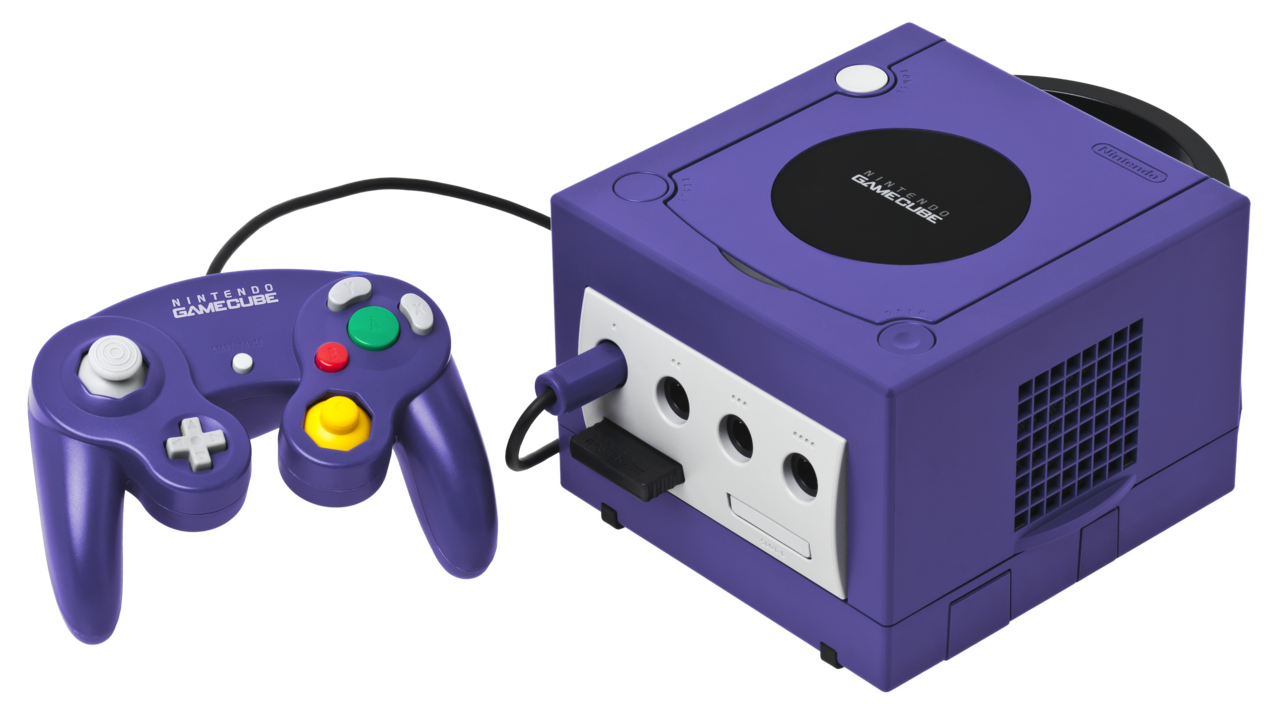
Nintendo GameCube
- Manufacturer
- Nintendo
- Production
- 2001–2007
- Generation
- Gen 6
- Type
- Home
- Launch price
- $199
- Media
- Disc
- Units sold
- 21.7M
About Nintendo GameCube
The Nintendo GameCube is a home video game console developed and marketed by Nintendo. It was released in Japan on September 14, 2001, in North America on November 18, 2001, and in Europe on May 3, 2002. It is Nintendo's fourth major home console, succeeding the Nintendo 64, and competed with Sony's PlayStation 2, Sega's Dreamcast, and Microsoft's Xbox in the sixth generation of game consoles.
Source: Wikipedia (text under CC BY-SA 4.0).
Lifetime sales
Official manufacturer-reported figures.
21.7Munits
208.6Mgames
9.6games / console
Source: Nintendo Co., Ltd. IR — Dedicated Video Game Sales Units, as of June 30, 2026.
Library & collector facts
653licensed games
- North America: 653
Lineage
Release timeline
- 🇯🇵 Japan
- September 14, 2001
- 🇺🇸 North America
- August 24, 2001
- 🇪🇺 Europe / PAL
- May 3, 2002
- 🇦🇺 Australia
- August 24, 2001
- Lifespan
- 6 years on market
Pricing
Launch price (2001)
- 🇺🇸 USD
- $199
- 🇯🇵 JPY
- ¥25,000
- 🇪🇺 EUR
- €199
Controller
GameCube controller / WaveBird
Launch titles & exclusives
Luigi's Mansion · Super Monkey Ball · Wave Race: Blue Storm · Star Wars Rogue Squadron II: Rogue Leader · Madden NFL 2002 · Tony Hawk's Pro Skater 3 · Crazy Taxi · All-Star Baseball 2002
None (sold standalone); various retailer bundles paired Luigi's Mansion or Super Smash Bros. Melee
Super Smash Bros. Melee · The Legend of Zelda: The Wind Waker · The Legend of Zelda: Twilight Princess (also Wii) · Metroid Prime 1 & 2 · Resident Evil 4 (initially GCN-exclusive) · Resident Evil REmake · Eternal Darkness · F-Zero GX · Pikmin 1 & 2 · Luigi's Mansion · Mario Sunshine · Paper Mario: Thousand-Year Door · Animal Crossing
Madden NFL 08 (2007) was among the last NA releases
NCAA College Basketball 2K3 (Sega Sports, very rare, ~$300+ CIB); Cubivore (~$300+ CIB); Gotcha Force (~$200+); Pokemon Box: Ruby & Sapphire (~$300 CIB); Sealed Resident Evil 4 Premium Edition
Hardware specs
- Os
- Proprietary
- Cpu
- IBM Gekko
- Gpu
- ATI Flipper @ 162 MHz
- Ram
- 24 MB 1T-SRAM as system RAM, 3 MB 1T-SRAM as video RAM, 16 MB DRAM as Input/output, I/O buffer RAM
- Power
- 46-watt AC adapter (DOL-001), 48-watt AC adapter (DOL-101)
- Sound
- RCA connector, Analog stereo, * I²S digital stereo (early models), * Dolby Pro Logic II with MusyX
- Weight
- 1.4 kg (3.1 lb)
- Dimensions
- 150 × 110 × 161 mm
- Display Output
- 480i, 480p
Hardware revisions
- Original GameCube DOL-001(2001)
full digital-audio output, component video port present (early units only)
- DOL-101(2004)
component video port removed (cost reduction) — heavily affects collector pricing as DOL-001 is the unit you need for component cables which themselves command ~$300+
- Panasonic Q SL-GC10(2001)
JP-only Panasonic variant playing DVDs as well as GCN discs
Launch colorways & special editions
- Spice Orange (JP/EU)
- Symphonic Green
- Platinum Silver
- Char Black
- Pokemon XD Edition
- Tales of Symphonia Edition (JP)
- Resident Evil 4 Limited (JP)
- Hanshin Tigers Edition (JP, extremely rare)
- Panasonic Q (JP, DVD-playing GCN)
Modding scene
- Difficulty
- soft-mod
- Custom firmware
- Swiss (homebrew, gold standard); Nintendont (loader for Wii GC compatibility)
Reception & legacy
Strong reviews for launch lineup and Rogue Leader; criticized for purple color, mini-DVDs (1.5GB capacity), and lack of DVD playback against PS2
Mini-DVD format limited multi-disc games and prevented DVD video playback at a time when PS2 was selling on that feature; the 'kiddie' positioning narrative dogged Nintendo throughout the generation
Cult favorite among Nintendo fans; Smash Bros. Melee became one of the most enduring competitive fighting games in history; the third-place finish in the 6th generation drove Nintendo to invent the Wii
References
More from Nintendo
No Nintendo GameCube listings yet. List yours or browse similar items.
Nintendo GameCube in the news
Recent coverage mentioning the Nintendo GameCube, gathered from 80+ gaming-news sources.

Nintendo Switch Online release date announced for Super Mario Sunshine
We finally have a release date for Super Mario Sunshine on Nintendo Switch Online. The game will be added to the service on August 13, 2026, Nintendo just announced. Super Mario Sunshine will be playable on Nintendo GameCube – Nintendo Classics for Switch 2. Note that a membership to Nintendo...
Nintendo GameCube – Nintendo Classics adds Super Mario Sunshine on August 13; Virtual Boy – Nintendo Classics adds D-HOPPER and ZERO RACERS on August 4
The Nintendo GameCube – Nintendo Classics app will add Super Mario Sunshine on August 13, …
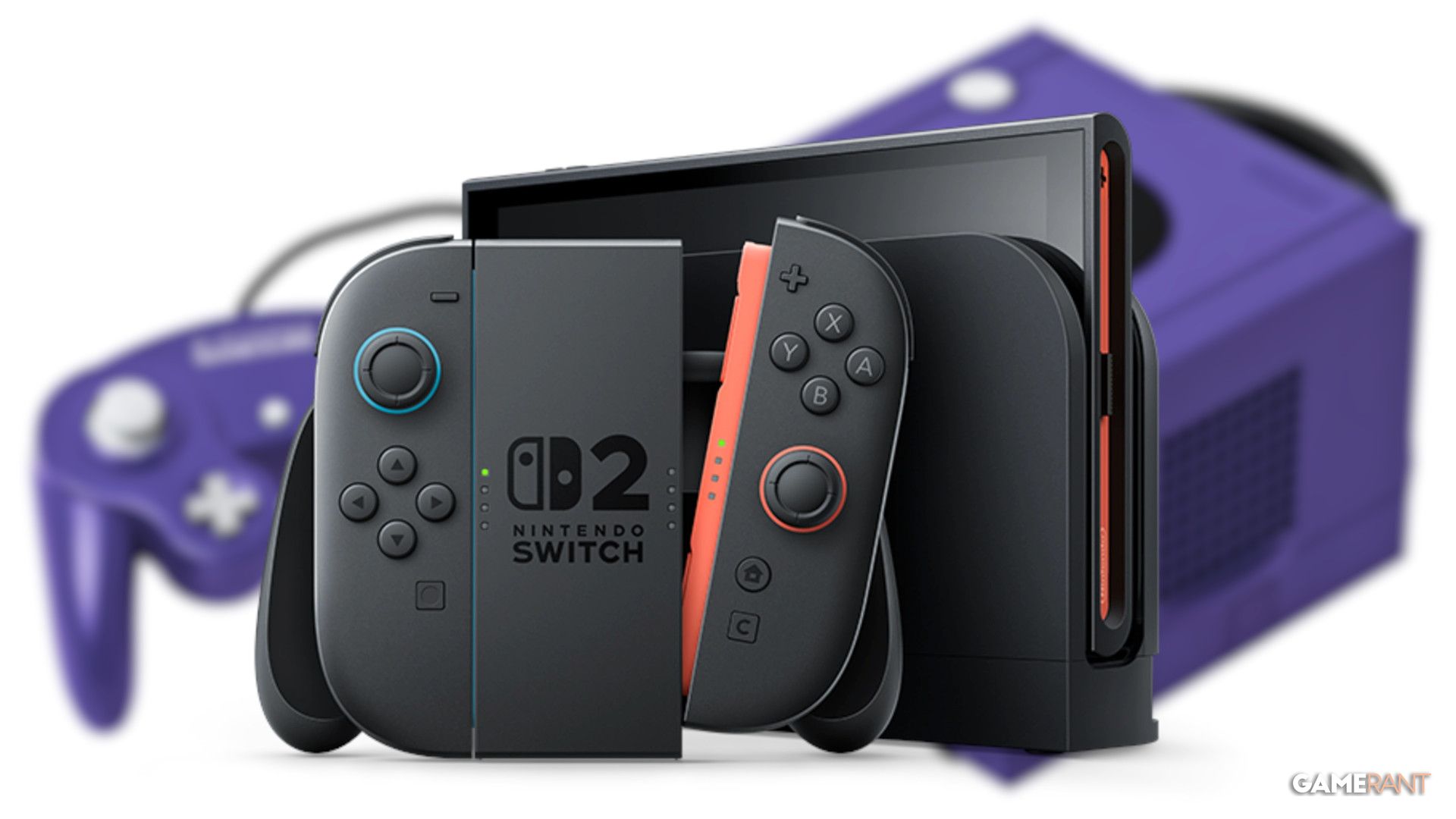
Nintendo Switch 2 Officially Beats GameCube
Just a year after the Nintendo Switch 2's release, the hybrid game system is already beating the Nintendo GameCube in a major way.

GameCube Internal Bluetooth Kit ‘v3’ – New Stock
Greg from LaserBear has just just opened pre-orders on his internal bluetooth kit for the Nintendo GameCube. This kit requires minimal installation and includes features that plug & play BT adapters can’t, such as remotely powering the console. This allows for up to 4 bluetooth controllers to be...

GameCube USB-C Power Adapter: Internal & External
Greg from Laser Bear has just opened pre-orders on two different USB-C power adapters for the Nintendo GameCube. One is a “pigtail adapter”, essentially for people who just need a new external power supply – Connect this plug & play cable to your GC’s original power input, then use a (recommended,...