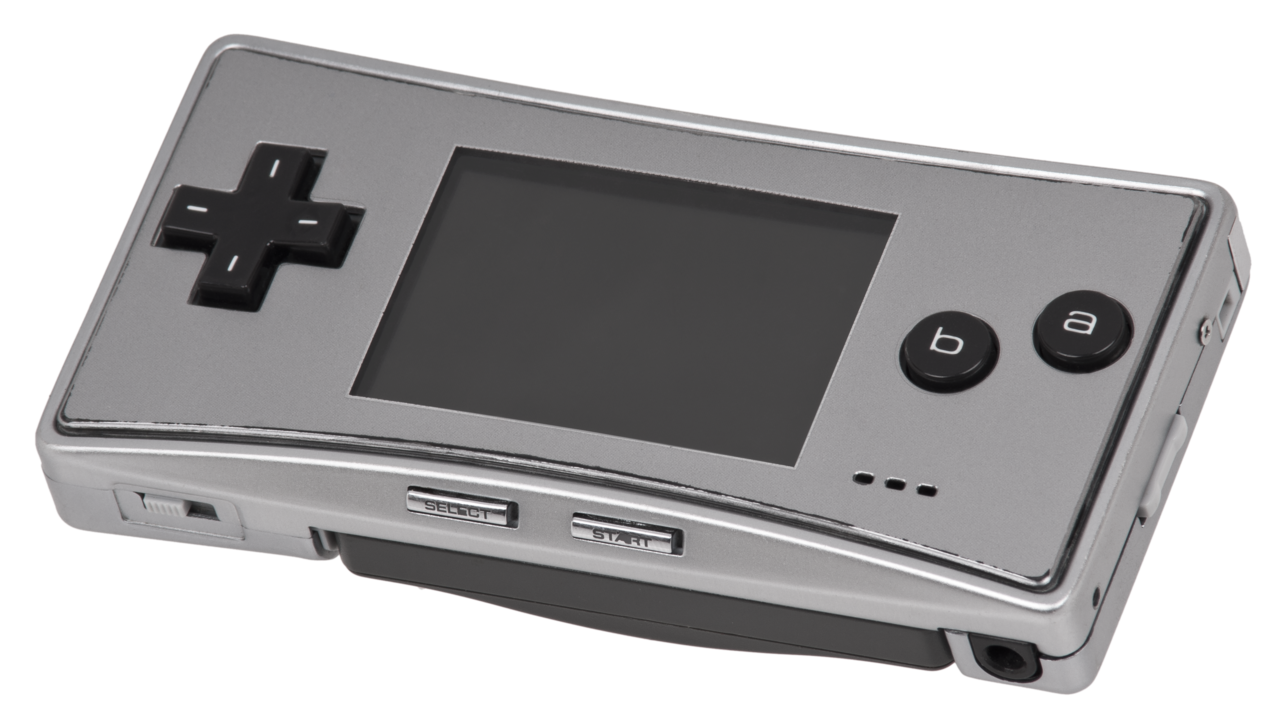
Game Boy Micro
Variant of Game Boy Advance
- Manufacturer
- Nintendo
- Production
- 2005–2008
- Generation
- Gen 6
- Type
- Handheld
- Launch price
- $99
- Media
- Cartridge
- Units sold
- 2.5M
About Game Boy Micro
The Game Boy Micro is a handheld game console developed and marketed by Nintendo. It was released in Japan on September 13, 2005, and in other regions later that year. A miniaturized version of the Game Boy Advance, it was the last in the Game Boy line. Unlike other Game Boy Advance models, the Micro lacks backward compatibility for original Game Boy and Game Boy Color games. It failed to meet Nintendo's sales expectations, having sold about 2.4 million units worldwide.
Source: Wikipedia (text under CC BY-SA 4.0).
Library & collector facts
1,538licensed games
- North America: 733
- Japan: 773
What's different from Game Boy Advance
- Smallest Nintendo handheld ever made (101x50x17.2mm)
- Backlit TFT screen with adjustable brightness
- Interchangeable removable faceplates
- 3.5mm headphone jack returned (vs. SP)
- Rechargeable lithium-ion battery
- Backward compatibility with Game Boy and Game Boy Color cartridges (no Z80 core / cart slot is GBA-only)
- Link cable compatibility with standard GBA cable (proprietary smaller port)
- screen: 2.9-inch GBA / 2.9-inch SP → 2-inch backlit (sharper pixel density but smaller)
- link port: Standard GBA link → proprietary Micro-specific connector requiring adapter
- target market: All-ages handheld → fashion-forward late-cycle accessory aimed at iPod-era users
Lineage
Release timeline
- 🇯🇵 Japan
- September 13, 2005
- 🇺🇸 North America
- September 19, 2005
- 🇪🇺 Europe / PAL
- November 4, 2005
- 🇦🇺 Australia
- November 3, 2005
- Lifespan
- 3 years on market
Pricing
Launch price (2005)
- 🇺🇸 USD
- $99
Launch titles & exclusives
Super Mario Advance · F-Zero: Maximum Velocity · Castlevania: Circle of the Moon · Tony Hawk's Pro Skater 2 · Rayman Advance · Pinobee: Wings of Adventure · GT Advance Championship Racing · Tweety and the Magic Gems
None standard; various retailer-specific Super Mario Advance bundles
Metroid Fusion · Metroid: Zero Mission · Castlevania: Aria of Sorrow · Castlevania: Harmony of Dissonance · Fire Emblem (NA debut of the series) · Fire Emblem: Sacred Stones · Mario & Luigi: Superstar Saga · Pokemon Ruby/Sapphire/Emerald/FireRed/LeafGreen · Mother 3 (JP-only) · Drill Dozer · WarioWare series · Golden Sun 1 & 2 · Advance Wars 1 & 2 · Sonic Advance trilogy
Final Fantasy VI Advance (2006/2007) was among the last major releases; production continued into 2008
Drill Dozer CIB (~$200+); Lufia: The Ruins of Lore CIB (~$200+); JP-only Mother 3 sealed; Pokemon Box GameCube tie-ins; Nintendo Power-distributed cartridge variants
Hardware specs
- Cpu
- ARM7TDMI
- Ram
- 288 KB RAM, 98 KB Video RAM
- Weight
- 80 g
- Dimensions
- 101 × 50 × 17.2 mm
Hardware revisions
- Original GBA AGB-001(2001)
horizontal form factor, non-backlit reflective TFT (the platform's signature flaw — terrible visibility without external light)
- Game Boy Advance SP AGB-101 (NA late) / AGB-001 (frontlit early)(2003)
clamshell, rechargeable battery
⚠ AGB-001 had a frontlit screen (dim), AGB-101 had a backlit screen (gold standard for the platform)
- Game Boy Micro OXY-001(2005)
compact final revision, drops backward compatibility with original GB/GBC titles
Launch colorways & special editions
- Famicom 20th Anniversary Edition (JP, red/gold with NES controller faceplate)
- Mother 3 Deluxe Box (JP, 2006)
- Final Fantasy IV Advance JP Limited
- Pokemon Center JP variants
- 20th Anniversary Famicom Edition (NA limited)
Modding scene
- Difficulty
- soft-mod
- Custom firmware
- N/A (ROM-based); flashcarts: EZ-Flash Omega Definitive Edition, Everdrive GBA X5
Reception & legacy
Strong — finally delivered SNES-class hardware in a handheld; criticized for terrible non-backlit launch screen, addressed years later with the AGS-101
Loss of GB/GBC backward compatibility was a significant regression that hurt sales; tiny screen — while sharp — was criticized as uncomfortable for long sessions; commercial flop (~2.5M units vs. 80M+ GBA family)
Defining handheld of the early 2000s; the GBA library is widely considered one of the strongest in handheld history; backward compatibility preserved GB/GBC playability through 2005
References
More from Nintendo
No Game Boy Micro listings yet. List yours or browse similar items.